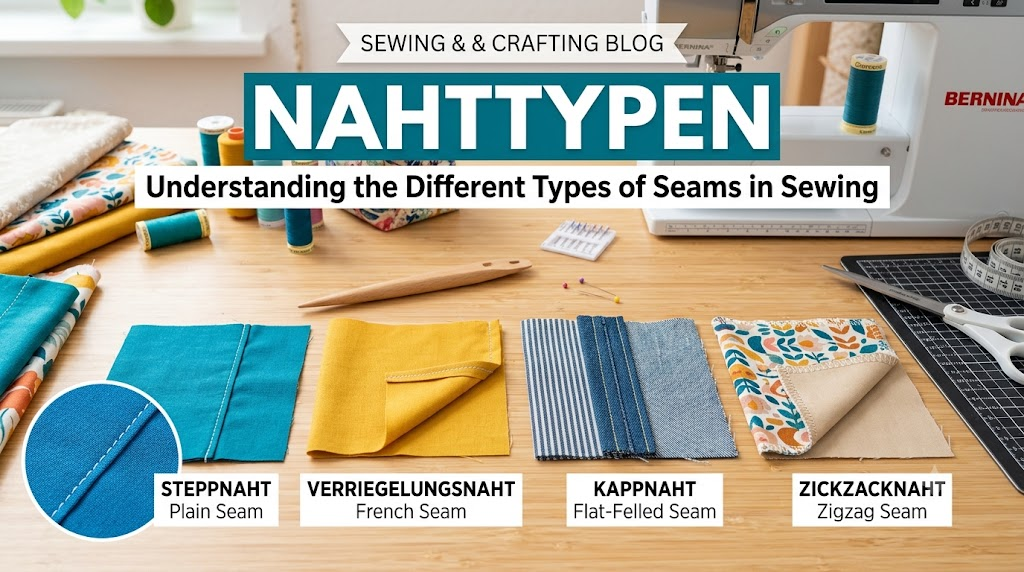
A beautiful garment can fail because of one weak seam. Fabric may pull apart. Raw edges may fray. Thick seams may also rub against the skin or make clothing look bulky.
That is why learning Nahttypen matters. The German word means “types of seams.” Each seam has a different shape, strength, finish, and purpose. Some suit light silk. Others hold thick denim together. A few are mainly used for style.
This guide explains the main seam types, how they work, and where each one is commonly used.
What Does Nahttypen Mean?
Nahttypen is the German term for seam types. In sewing, a seam joins two or more layers of fabric or another material with stitches. Seams form the basic structure of clothing, bags, curtains, bedding, and many other textile products.
A seam is not the same as a stitch.
The stitch is the thread pattern made by the needle. A seam is the full join created when that stitch holds fabric pieces together.
For example, a straight lockstitch may be used to make a plain seam. The same stitch may also be used for a French seam, bound seam, or decorative topstitched seam.
Why Choosing the Right Seam Matters
The right seam should match the fabric and the purpose of the item.
A seam in a silk blouse does not face the same stress as one in a pair of jeans. Sportswear needs room to stretch. Children’s clothing needs strong joins. An unlined jacket may need neat inner edges because the seams remain visible.
Good Nahttypen help improve:
- Strength
- Comfort
- Flexibility
- Appearance
- Durability
- Resistance to fraying
- Ease of washing and care
The thread, stitch type, fabric, seam shape, and number of stitched rows all affect the final result. Industrial seam quality may also be judged by seam strength, seam size, and resistance to fabric slippage.
Quick Guide to Common Nahttypen
| Seam type | Best used for | Main benefit |
|---|---|---|
| Plain seam | Shirts, dresses, skirts | Simple and flexible |
| French seam | Silk, chiffon, light cotton | Hides raw edges |
| Flat-felled seam | Jeans, shirts, workwear | Strong and neat |
| Lapped seam | Leather, felt, thick fabric | Reduces some bulk |
| Bound seam | Unlined jackets, bags | Clean inner finish |
| Overlocked seam | Knitwear, casual clothes | Fast edge control |
| Flat seam | Sportswear, underwear | Low bulk |
| Piped seam | Cushions, dresses, bags | Decorative shape |
| Welt seam | Coats, jackets, trousers | Strong tailored look |
| Double-stitched seam | Workwear, active garments | Added strength |
The Plain Seam
The plain seam is the most common seam in home sewing.
To make it, place the fabric pieces with their right sides facing each other. Match the raw edges. Sew along the marked seam line. Then press the seam allowances open or to one side.
This seam appears in shirts, skirts, dresses, sleeves, trousers, and many household items.
University of Nebraska guidance describes the plain seam as a basic part of garment construction. It joins two pieces of fabric and normally requires a separate edge finish when the material may fray.
Advantages of a Plain Seam
It is quick to sew. It also works with many woven fabrics and is easy to alter later.
But the raw edges remain exposed inside the garment. You may need to finish them with a zigzag stitch, overlocker, binding, or pinking shears.
The French Seam
A French seam hides both raw fabric edges inside a narrow folded seam.
First, sew the fabric with the wrong sides together. Trim the seam allowance. Turn the fabric so the right sides face each other. Then sew again, enclosing the first line of stitching and the raw edges.
The finished result looks clean on both sides.
A French seam needs two sewing operations with a folding step between them. This creates a closed seam with the raw edges trapped inside.
Best Fabrics for French Seams
This seam works well with:
- Chiffon
- Organza
- Silk
- Voile
- Fine cotton
- Lightweight linen
It is useful for sheer garments because an overlocked edge might be visible through the fabric.
French seams are less suitable for thick material. Several folded layers can create a hard, bulky ridge.
The Flat-Felled Seam
A flat-felled seam is strong, flat, and fully enclosed.
It is often seen on jeans, denim jackets, casual shirts, uniforms, and work clothes. One seam allowance is trimmed. The wider allowance is folded around it. The folded edge is then stitched flat against the garment.
This method hides the raw edges and adds another visible row of stitching.
Lapped and felled seam structures are widely used where a strong join is needed. Coats notes that felled forms are common in jeans because their construction helps resist wear and fraying.
Why This Seam Is So Strong
The fabric overlaps, and more than one stitched line supports the join. The seam also lies flat after sewing.
It takes more time than a plain seam. Sewing around tight curves can also be difficult. Still, few Nahttypen offer the same mix of strength and a clean finish.
The Lapped Seam
A lapped seam is made by placing one fabric edge over another instead of putting the right sides together.
The overlapping layers are stitched in place with one or more rows of thread. The edges may stay flat or be folded before sewing.
Under the ISO-based seam system, lapped seams form one of the main seam classes. They use at least two pieces of material with one edge placed over the other.
Lapped seams are useful for materials that do not fray easily, such as:
- Leather
- Suede
- Felt
- Vinyl
- Some nonwoven fabrics
They may also appear in heavy workwear, tents, outdoor products, and decorative clothing.
The overlap can be visible, so accurate cutting and straight stitching matter.
The Bound Seam
A bound seam has a strip of fabric wrapped around its raw edge.
Bias tape is often used because it bends around curves without forming deep folds. The binding covers the unfinished edge and gives the inside of the item a neat appearance.
Bound seams are common in:
- Unlined jackets
- Coats
- Bags
- Quilts
- Necklines
- Armholes
- Decorative home items
In technical seam classification, a bound seam is formed by folding a binding strip over an edge and stitching the binding to the main material.
This finish looks polished, but it adds extra fabric. Very thick binding may make a light garment feel stiff.
The Overlocked or Serged Seam
An overlocked seam is sewn with an overlocker, also called a serger.
The machine cuts the raw edge and wraps thread around it. Some overlock machines can join the fabric and finish the edge in one step.
This method is fast. It is widely used in factory-made clothing, knit garments, T-shirts, casual dresses, and children’s wear.
Overedge stitching may be used to neaten cut fabric and reduce fraying. It can also form part of a seam that joins two fabric layers.
Is an Overlocked Seam Always Strong Enough?
Not always.
A narrow overlocked seam may work well on light knits. A heavy garment may need a straight or chain stitch beside the overlocking for more support.
Test the seam on scrap fabric first. Stretch it gently. Check whether the stitches open, break, or pull the fabric.
The Flat Seam
A flat seam joins fabric edges with little or no overlap.
The edges may meet directly and be covered with zigzag, chain, or cover stitches. The goal is to avoid a thick ridge.
Flat seams are often used in:
- Underwear
- Sports clothing
- Base layers
- Swimwear
- Compression garments
- Fine knitwear
Industry guidance explains that flat seams are chosen when extra thickness cannot be accepted. They can make close-fitting garments smoother and more comfortable against the skin.
This is an important choice for clothing worn during movement. A raised seam may rub the skin during running, cycling, or training.
The Piped Seam
A piped seam contains a narrow covered cord between two fabric pieces.
The cord creates a raised line along the seam. It may match the main fabric or use a contrasting color.
Piping is common on:
- Cushions
- Sofas
- Handbags
- Dresses
- Jackets
- Collars
- Pocket edges
Decorative seam classes include stitching that forms raised surface details, including piping and similar effects.
A zipper foot often helps the needle sew close to the covered cord. Keep the piping smooth around corners. Small clips in the seam allowance can help it follow curves.
The Welt Seam
A welt seam begins much like a plain seam.
After stitching, both seam allowances are pressed to one side. One or two rows of topstitching then hold them flat.
The result looks firm and tailored. It is often used on coats, jackets, trousers, uniforms, and heavier garments.
A single-welt seam has one visible topstitched line. A double-welt seam usually has two.
This seam is easier to create than a true flat-felled seam because the raw edges are not always fully enclosed. They should normally be finished before the final topstitching.
The Double-Stitched Seam
A double-stitched seam uses two rows of stitching.
The second line runs close to the first. This gives more support to areas that face pulling or repeated movement.
Common uses include:
- Armholes
- Crotch seams
- Sports clothing
- Work clothes
- Bags
- Children’s wear
The two stitched rows should stay parallel. Uneven spacing may cause puckering or make the seam look careless.
A double-stitched seam is strong, but it is not the same as a flat-felled seam. Its raw edges may still need finishing.
Seam Types and Seam Finishes Are Different
Sewers often mix up seam types and seam finishes.
A seam joins fabric pieces. A seam finish protects or covers the raw allowance after the pieces have been joined.
The University of Kentucky defines a seam finish as a treatment placed on an unfinished seam edge to control raveling, curling, or rolling.
Common finishes include:
- Zigzag stitching
- Overlocking
- Bias binding
- Pinking
- Turned-and-stitched edges
- Clean-finished edges
Some Nahttypen already hide the raw edges. French, bound, and flat-felled seams may not need an extra finish.
A plain seam often does.
How to Choose the Best Nahttypen
Start with the sewing pattern. It may name the best seam or give a set seam allowance.
Then study the fabric.
Light fabric needs a narrow and soft seam. Heavy fabric needs strength without too many thick layers. Stretch fabric needs stitches that can move with it.
Ask these questions:
Will the Seam Face Heavy Stress?
Use a flat-felled, double-stitched, reinforced, or strong overlocked seam for areas that will be pulled often.
Will the Inside Be Visible?
Choose a French, bound, or flat-felled seam for an unlined garment or reversible item.
Does the Fabric Fray?
Enclose the edges or add overlocking, zigzag stitching, or binding.
Is the Fabric Thick?
Avoid folding too many layers. A lapped or simple finished plain seam may create less bulk.
Must the Seam Stretch?
Use an overlocked, flat, or suitable stretch seam. Test the stitch before sewing the full garment.
Is the Seam Decorative?
Try piping, contrast topstitching, a welt seam, or ornamental stitching.
Common Seam Mistakes
One common mistake is using the same seam on every fabric.
A French seam may look lovely on chiffon but feel stiff in thick denim. A narrow overlocked seam may suit a T-shirt but fail under the stress placed on a work bag.
Other problems include:
- Using the wrong seam allowance
- Skipping the pressing stage
- Stretching fabric while sewing
- Failing to finish fraying edges
- Using a blunt needle
- Choosing weak or unsuitable thread
- Sewing curves without clipping or notching
- Ignoring the direction of the fabric grain
Press after each major sewing step. Pressing sets the seam and helps the fabric lie flat. It is often the difference between homemade-looking work and a clean finish.
Final Thoughts on Nahttypen
Understanding Nahttypen gives you more control over every sewing project.
The plain seam covers most basic work. The French seam gives light fabric a clean inside. Flat-felled seams add strength. Bound seams create a polished edge. Overlocked and flat seams work well where speed, stretch, or low bulk matters.
No single seam is best for everything.
Look at the fabric, stress level, garment design, and final appearance. Then choose the seam that fits all four. That small decision can improve the comfort, strength, and life of the finished item.
FAQ’s
What does Nahttypen mean in sewing?
Nahttypen is a German word that means types of seams. It covers the different methods used to join or finish fabric.
Which seam is easiest for beginners?
The plain seam is usually the easiest. It uses one main line of straight stitching and works for many basic projects.
Which seam is best for fabric that frays?
French, bound, flat-felled, and overlocked seams can control fraying. The best choice depends on the fabric’s weight and the desired look.
What is the strongest type of seam?
Flat-felled and reinforced double-stitched seams are strong choices. The final strength also depends on the thread, stitch, fabric, and sewing quality.
Which Nahttypen work best for stretchy fabric?
Overlocked seams, flat seams, and stretch stitches work well for many knit fabrics. Always test the seam on a spare piece before starting the garment.