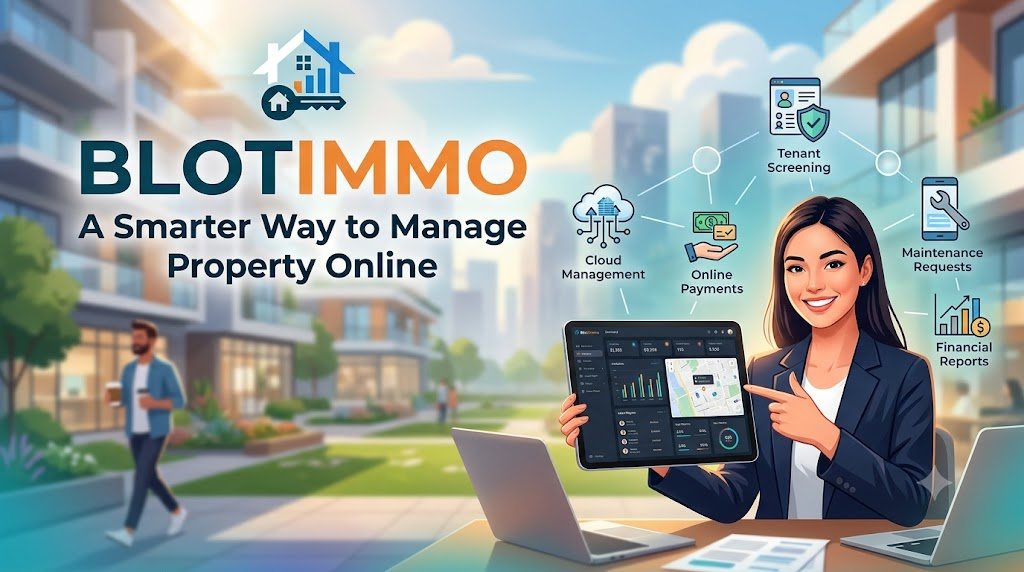
Blotimmo represents a modern vision for the property market. It brings buying, selling, renting, and managing real estate into one simple digital space.
Property transactions often involve many people, long forms, unclear fees, and repeated calls. Blotimmo aims to reduce these problems through an all-in-one property platform.
The concept focuses on access, speed, trust, and clear information. It gives buyers, sellers, renters, landlords, and property professionals one place to manage each step.
What Is Blotimmo?
Blotimmo is a digital property concept designed to make real estate easier to understand and manage.
Instead of using separate websites for listings, payments, documents, agents, and property records, users could access these services from one platform.
The idea combines property search tools, digital communication, secure records, price insights, and transaction support.
Blotimmo is not limited to one type of user. It could serve homebuyers, tenants, landlords, investors, agents, developers, and property managers.
Its main goal is simple. It aims to make property activity more organized, open, and efficient.
Why Property Transactions Need a Digital Upgrade
Buying or renting property can take a long time. Users may need to contact several agents, visit many websites, review large documents, and compare unclear prices.
Sellers and landlords also face challenges. They must prepare listings, answer questions, arrange visits, check applicants, and manage paperwork.
Many property systems still depend on slow manual work. Information may be missing, outdated, or difficult to verify.
Blotimmo would bring these tasks together. It could reduce repeated work and give users a clearer view of each transaction.
A connected platform may also lower confusion. Users could see important updates, documents, messages, and payments in one account.
An All-in-One Property Platform
The strongest part of the Blotimmo concept is its all-in-one structure.
Users would not need several separate tools to complete one property deal. They could search, compare, contact, verify, apply, sign, and track progress through one dashboard.
A buyer could save listings, compare prices, book visits, upload documents, speak with an agent, and follow the purchase process.
A tenant could search for homes, send rental applications, review lease terms, and pay rent online.
A landlord could list a property, screen applicants, organize leases, collect payments, and manage repair requests.
This single-platform model could save time for every person involved.
Smart Property Search
Property search would be one of Blotimmo’s main features.
Users could search by location, price, property type, size, number of rooms, and available features.
Advanced filters could help users find homes based on practical needs. These may include parking, schools, public transport, outdoor space, or pet rules.
The platform could also offer map-based search. This would allow users to explore properties by neighborhood and nearby services.
Saved searches and alerts could notify users when a matching property becomes available.
Better search tools would make the process faster and more focused.
Clear and Detailed Property Listings
Poor listings can waste time. Some contain weak photos, missing details, or unclear pricing.
Blotimmo could create a standard format for every property listing. Each page could show the price, size, location, features, fees, availability, and contact details.
Listings could also include verified photos, floor plans, virtual tours, energy details, and neighborhood information.
A clear listing system would help users compare properties more fairly.
It would also help sellers and landlords present their properties in a professional way.
Transparent Prices and Fees
Unexpected costs are a common concern in real estate.
Blotimmo could improve transparency by showing known fees earlier in the process. These may include service charges, deposits, taxes, maintenance costs, agent fees, and legal expenses.
A cost calculator could help users estimate the full financial impact of a property.
Buyers could compare monthly payments and expected ownership costs.
Tenants could see rent, deposits, utilities, and other charges before applying.
Clear costs would help users make better decisions and avoid late surprises.
Digital Documents and Secure Records
Property transactions involve many documents. These may include identity records, contracts, inspection reports, proof of income, ownership papers, and payment records.
Blotimmo could provide secure digital storage for these files.
Users could upload documents once and access them when needed. Permission controls could limit who can view each file.
Digital signatures could allow users to approve agreements without printing or scanning documents.
A clear document history could show when a file was uploaded, reviewed, changed, or signed.
This would create a more organized record of each transaction.
Direct Communication
Communication delays can slow down property deals.
Blotimmo could include built-in messaging between buyers, sellers, tenants, landlords, and agents.
Users could ask questions, share updates, confirm appointments, and discuss documents through one system.
Automatic notifications could alert users when a message, payment, application, or document requires attention.
Keeping communication inside the platform could reduce missed calls and lost email threads.
It could also create a clear history of important discussions.
Online Viewing and Appointment Booking
Property visits are an important part of buying and renting.
Blotimmo could let users book viewing times directly from a listing page.
Available slots could appear on a shared calendar. Users could select a suitable time without several phone calls.
Virtual tours could help users explore a property before arranging an in-person visit.
This feature would be useful for people moving from another city or country.
It could also help agents and landlords manage several appointments more efficiently.
Support for Buyers and Sellers
Blotimmo could guide buyers through each stage of a property purchase.
A progress tracker could show steps such as property search, viewing, offer, document review, inspection, payment, and completion.
Sellers could manage listing details, inquiries, visits, offers, and legal documents from one dashboard.
Both sides could see what has been completed and what still needs attention.
This would make the transaction easier to follow.
It could also reduce uncertainty during long property deals.
Rental Management for Tenants and Landlords
Blotimmo could also support long-term rental management.
Tenants could access lease documents, payment history, maintenance requests, and landlord messages.
Landlords could monitor rent, lease dates, property issues, and tenant records.
Automatic payment reminders could help reduce missed rent.
Maintenance tools could allow tenants to report a problem, upload photos, and follow the repair status.
This feature would turn Blotimmo into more than a listing website. It would become a full property management system.
Tools for Property Professionals
Agents, developers, and property managers could also use Blotimmo.
Professional accounts could include lead management, listing performance, client communication, appointment tools, and transaction tracking.
Agents could manage several buyers and sellers from one place.
Developers could present new projects, share floor plans, track inquiries, and manage reservations.
Property managers could oversee several buildings, tenants, leases, payments, and repair requests.
These tools could improve daily work and reduce the need for separate software.
Data and Market Insights
Good property decisions depend on good information.
Blotimmo could offer local market data, recent price changes, rental trends, demand levels, and property comparisons.
Buyers could use this information to understand whether a property price appears fair.
Sellers could use it to choose a realistic asking price.
Investors could compare areas based on rental demand, expected returns, and market activity.
These insights should be presented in simple language. The goal would be to support users, not overwhelm them with complex data.
Trust, Privacy, and Security
Trust would be essential for Blotimmo.
The platform could use identity checks, secure payments, encrypted data, and verified listings.
Fraud reporting tools could allow users to flag suspicious activity.
Clear privacy controls could show how personal information is stored and shared.
Users should also be able to choose which professionals can access their files.
A strong security system would help Blotimmo build confidence among users.
How Blotimmo Could Improve Accessibility
Property services should be easy to use for people with different needs and levels of experience.
Blotimmo could use simple menus, clear instructions, readable text, and mobile-friendly pages.
The platform could also support several languages.
Guided steps could help first-time buyers and renters understand unfamiliar terms.
Accessibility features could support users with visual, hearing, or mobility needs.
This wider approach would make property tools available to more people.
Possible Challenges
An all-in-one property platform would also face challenges.
Property laws, taxes, contracts, and rental rules vary by location. Blotimmo would need to adjust its tools for each market.
The platform would also need reliable property data. Outdated or false listings could damage user trust.
Security would require constant attention because property transactions involve money and private documents.
Blotimmo would also need strong partnerships with agents, legal services, payment providers, and property professionals.
These challenges are serious, but careful planning could reduce the risks.
The Future Vision of Blotimmo
Blotimmo represents a future where property transactions feel less fragmented.
Its all-in-one approach could connect property search, communication, documents, payments, management, and market data.
The concept is built around a simple idea. Users should not need many disconnected tools to complete one property task.
By bringing these services together, Blotimmo could make real estate more open, faster, and easier to manage.
Its value would depend on trust, useful features, clear design, and accurate information.
With the right system, Blotimmo could become a practical digital space for every stage of the property journey.
Final Thoughts
Blotimmo is more than a property listing idea. It is a complete digital property ecosystem.
It could support buyers searching for homes, tenants managing leases, landlords collecting rent, and professionals handling several properties.
The platform’s greatest strength would be convenience. Users could manage important property tasks without moving between many websites and services.
Blotimmo shows how technology could simplify real estate while improving transparency and control.
Its vision is clear: one platform, better information, and a smoother property experience for everyone.