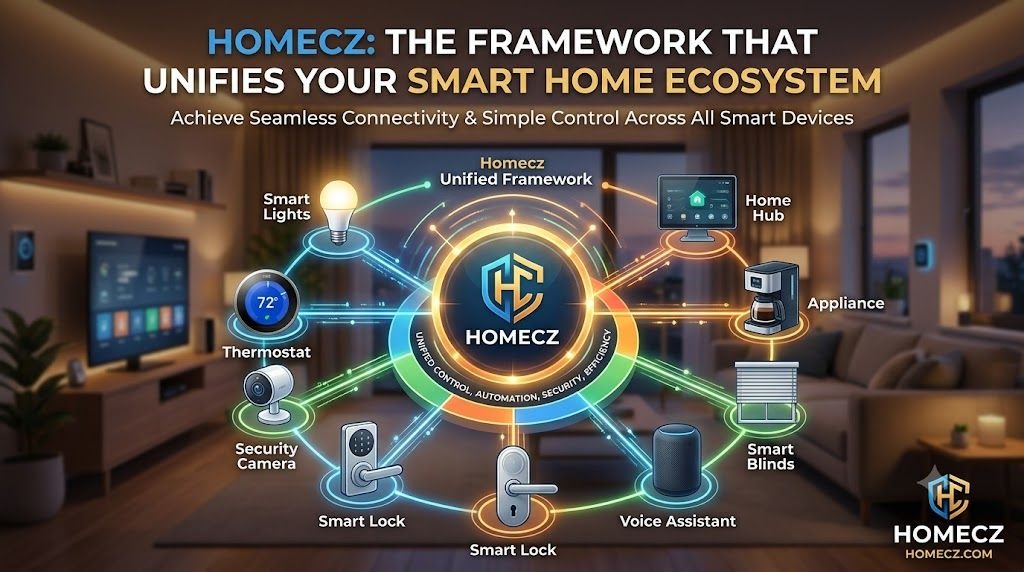
Imagine walking into a home where every device—lights, thermostat, security cameras, entertainment system—understands you without needing separate apps, voice commands, or manual overrides. This is the promise of a truly unified smart home. Yet for years, the reality has been a disconnected mess of proprietary protocols and siloed ecosystems. Enter homecz, a groundbreaking Home Connection Z Tech framework designed to bridge those gaps and make your home think, respond, and interact as a single intelligence.
In this article, we explore what homecz is, why it matters, and how it turns the dream of a seamless smart home into a practical, everyday reality. Whether you’re a tech enthusiast, a homeowner considering automation, or a developer looking to build on a future-proof platform, understanding homecz will change the way you think about connected living.
What Is Homecz? A New Standard for Home Intelligence
Homecz is short for “Home Connection Z Tech”—a comprehensive framework that unifies how modern homes operate. Unlike other smart home platforms that require you to choose one brand or protocol (like Zigbee, Z‑Wave, or proprietary hubs), homecz is an open, adaptable layer that sits above existing technologies. It doesn’t replace your smart lights or thermostat; it gives them a common language and a central brain.
Think of it like an operating system for your house. Just as Windows or macOS manage different applications and hardware on a computer, homecz manages sensors, actuators, and user preferences across devices from any manufacturer—as long as they adhere to the framework’s connection standards. The result? A home that learns your routines, anticipates your needs, and responds with minimal friction.
Key Features That Make Homecz Stand Out
What sets homecz apart from the dozens of “smart home hubs” on the market? It’s not just another gadget; it’s a philosophy and a technical architecture. Below are the core features that define the homecz experience.
1. True Interoperability
The biggest pain point in smart homes is compatibility. Your Philips Hue lights might not talk to your Nest thermostat or your August lock without elaborate workarounds. Homecz erases those boundaries by translating between protocols in real time. Whether a device uses Wi‑Fi, Thread, Bluetooth, or Zigbee, homecz ensures it can share data and trigger actions across the whole network.
2. Adaptive Intelligence
Homecz doesn’t just follow rules you set; it learns from your patterns. Over time, the framework builds a behavioral model of your household—when you wake, when you leave, what temperature you prefer in the evening. It then adjusts lighting, climate, and security settings automatically, without requiring constant app interaction.
3. Robust Security and Privacy
Because homecz sits at the core of your home’s operations, security is built in from the ground up. All communication between devices is encrypted end‑to‑end, and user data is stored locally (with optional cloud backup). You control exactly what information leaves your home, and the framework constantly monitors for anomalies that could indicate a breach.
4. Expandability Without Complexity
Adding a new device to a homecz system takes seconds. The framework auto‑discovers compatible hardware and offers configuration suggestions based on your existing setup. No more manual pairing, connection codes, or multiple apps. Just plug (or pair) and it works.
How Homecz Revolutionizes the Way You Interact With Your Home
The true measure of any smart home framework is the user experience. Homecz turns everyday scenarios into effortless moments. Let’s look at a few examples:
- Morning routine: Your alarm goes off. Homecz gradually brightens the bedroom lights to mimic sunrise, adjusts the thermostat to your morning comfort level, and starts brewing coffee—all without you lifting a finger.
- Leaving for work: You step out the door. Homecz detects your departure via geofencing, locks all doors, arms the security system, and turns off unused lights and electronics. When you return, it reverses the process and even pre‑heats the living room based on your estimated arrival time.
- Movie night: Say “movie mode” to your voice assistant (or tap a button on the homecz dashboard). The lights dim, the shades close, the surround sound turns on, and the TV switches to your streaming service—all synchronized through the framework.
These interactions aren’t just convenient—they save energy, reduce wear on devices, and give you back the time you used to spend managing technology.
Building Your Smart Home With Homecz
Ready to start? The beauty of homecz is that you don’t have to rip out your existing setup. The framework is designed to integrate with popular brands and legacy devices. Here’s how to get started:
Step 1: Choose Your Hub
Homecz runs on a dedicated hub (available as hardware or software that can be installed on a Raspberry Pi, NAS, or even a cloud instance, depending on your privacy preferences). The hub acts as the central processor for all rules and learning.
Step 2: Connect Your Devices
Using the homecz app or web dashboard, scan for devices on your network. The framework will identify compatible gear and offer to add them. For non‑native devices, you may need to install a “bridge” (most popular ecosystems like Philips Hue or Lutron already have official connectors).
Step 3: Automate and Learn
Start with a few simple automations (e.g., turn off lights at bedtime). As the system gathers data, it will begin suggesting more advanced routines. You can always override or fine‑tune every behavior in the visual editor.
The Future of Homecz and Connected Living
As an open framework, homecz is constantly evolving. The development community already contributes plug‑ins for everything from pet feeders to weather stations. The next major release promises even deeper integration with energy grid management—allowing your home to sell back excess solar power or automatically shift load to off‑peak hours.
More importantly, homecz is leading the charge toward the “anticipatory home” —a space that doesn’t just react but proactively supports your well‑being, security, and comfort. With its foundation in the Home Connection Z Tech framework, homecz is not just a product; it’s a standard for the next generation of living.
Conclusion: A Smarter Home Starts With Homecz
Fragmentation has held back the smart home revolution for too long. Homecz cuts through the noise by delivering a unified, intelligent, and secure platform that works with what you already own. Whether you’re controlling one smart bulb or a fully automated house, the homecz framework adapts to you—not the other way around.
If you’re ready to experience a home that truly thinks, responds, and interacts as a single organism, it’s time to explore what homecz can do. The future of connected living is here—and it’s unified.